
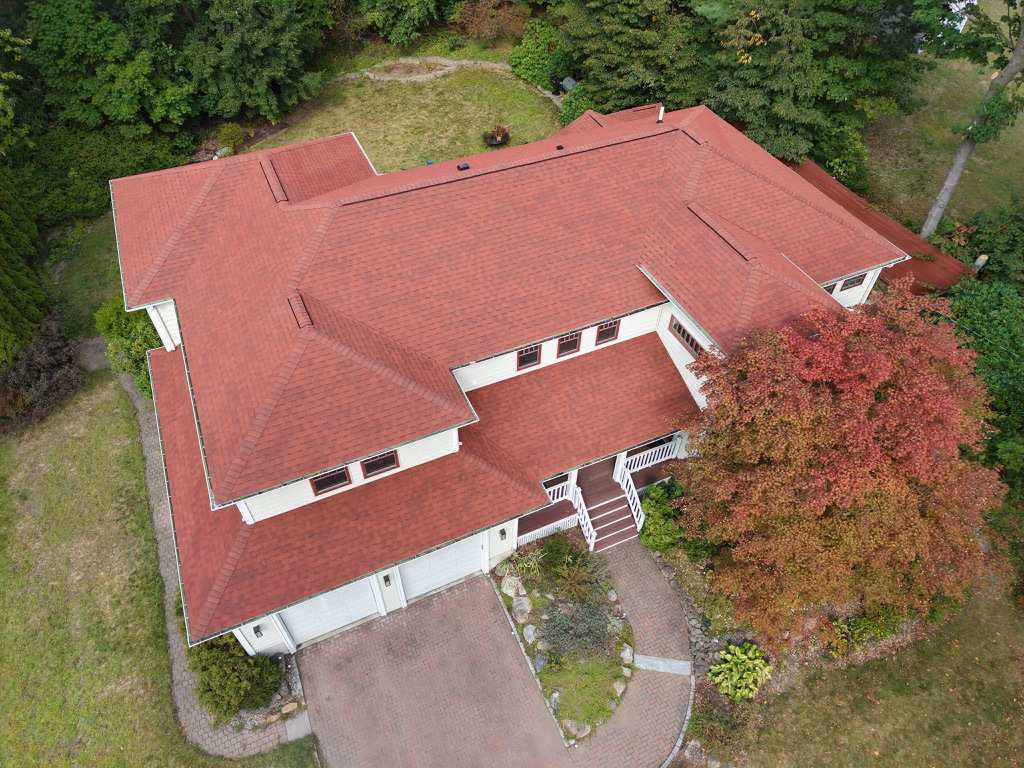
Peabody has a way of keeping roofers honest.
From the street, many houses look similar—cap-style homes from the post-war years, modest Colonials, split-levels tucked into neighborhoods that grew fast in the 1960s and 70s. But once you’re up on the roof and start opening things up, you quickly realize how much variation there actually is. Different additions. Different reroofs layered over decades. Different approaches taken by different crews long before we were ever involved.
That’s why roofing work here tends to demand more judgment than people expect.
The Age of the Housing Stock Changes the Conversation
A large portion of Peabody’s homes fall into a window where original construction quality was decent, but long-term planning wasn’t always there yet. We regularly see houses that were framed well, but ventilation was treated as an afterthought. Ridge vents added later without correcting intake. Attics that were never balanced for airflow. Rooflines altered over time to accommodate additions or dormers, often without fully reworking the drainage paths.
Those details matter here because once moisture gets trapped, the freeze-thaw cycles we see every winter don’t take long to expose weaknesses.
A roof that might limp along elsewhere starts showing problems much sooner in this environment.
Wind, Snow Load, and the Edges That Take the Beating
Peabody isn’t coastal in the way towns like Swampscott or Marblehead are, but it still takes a fair amount of wind exposure, especially in open neighborhoods and on homes set higher than the surrounding grade. Combine that with heavy snow years and repeated ice buildup at the eaves, and you start to see where roofs fail first.
It’s almost always at transitions:
Eaves where insulation coverage is inconsistent
Valleys where older flashing methods were used
Roof-to-wall intersections that were never fully rebuilt when siding changed
These aren’t dramatic failures at first. They show up as subtle staining, soft spots in sheathing, or small leaks that only happen under very specific conditions. Catching and addressing those areas properly is what separates a roof that truly resets the clock from one that just looks new.
What We Commonly Find Once the Old Roof Comes Off
Homeowners are often surprised by how much of the real work happens after demolition.
In Peabody, it’s not unusual for us to find:
Sheathing that’s structurally sound in most areas but compromised along one entire roof edge
Evidence of past leaks that were “handled” with surface patches rather than corrected at the source
Inconsistent nailing patterns from older reroofs that don’t meet today’s standards
None of that necessarily means the house was neglected. In many cases, it reflects the norms of the time or quick fixes done to get through a season. But ignoring those conditions during a reroof is how problems get baked in for another 20 years.
Addressing them takes more time and, more importantly, more restraint. Not every solution is visible from the driveway, but it’s the invisible corrections that determine how the roof performs long-term.
Ventilation and Water Management Are the Quiet Deciding Factors
A lot of roofing decisions get framed around shingles and color. In Peabody, the more important decisions usually involve airflow and water movement.
We spend a lot of time evaluating:
Whether attic ventilation is actually working as a system
How water sheds at complex intersections during wind-driven rain
Where ice dams are most likely to form given insulation patterns and roof geometry
These aren’t one-size-fits-all answers. Two houses on the same street can behave very differently depending on orientation, attic layout, and how heat moves through the structure. Getting those details right often requires adjusting the plan once work is underway, based on what we uncover.
That’s part of the reality of roofing here.
Material Choices Are About Fit, Not Hype
Most homeowners assume material selection is about finding the “best” product. In practice, it’s about finding what fits the house, the exposure, and the long-term expectations.
In Peabody, durability and water control tend to matter more than novelty. Roof assemblies need to handle:
Repeated thermal movement
Long periods of snow sitting on the roof
Seasonal wind events that test edge detailing
That often means focusing on how materials work together rather than chasing upgrades that don’t address the underlying conditions. The goal is a system that stays stable year after year, not one that just checks boxes.
The Judgment Calls Homeowners Don’t Always See
Some of the most important decisions we make never show up on an invoice line item.
Do we rebuild a section of roofline to improve drainage, even if the old one technically “worked”?
Do we correct a ventilation imbalance that wasn’t part of the original scope but will clearly affect performance?
Do we recommend stopping to address an underlying issue rather than covering it and moving on?
Those are judgment calls that come from spending a lot of time on houses like these, in towns like this. They’re also the decisions that prevent callbacks and premature failures.
It’s the same mindset we apply across our roofing work in Peabody, where the conditions demand more than a surface-level solution.
Why Experience in This Town Actually Matters
Peabody rewards contractors who understand its patterns and punishes those who treat every roof the same.
Homes here tell their stories slowly—through staining patterns, subtle framing movement, and wear that only shows up after a few tough winters. Knowing how to read those signals makes the difference between replacing a roof and actually solving the problems that led to its failure in the first place.
For homeowners who plan to stay put, that distinction matters.
Roofing in Peabody isn’t about shortcuts or rushing to the finish line. It’s about paying attention, making informed adjustments as conditions reveal themselves, and building a roof that holds up to the realities of this town—not just the photos taken the day it’s done.