
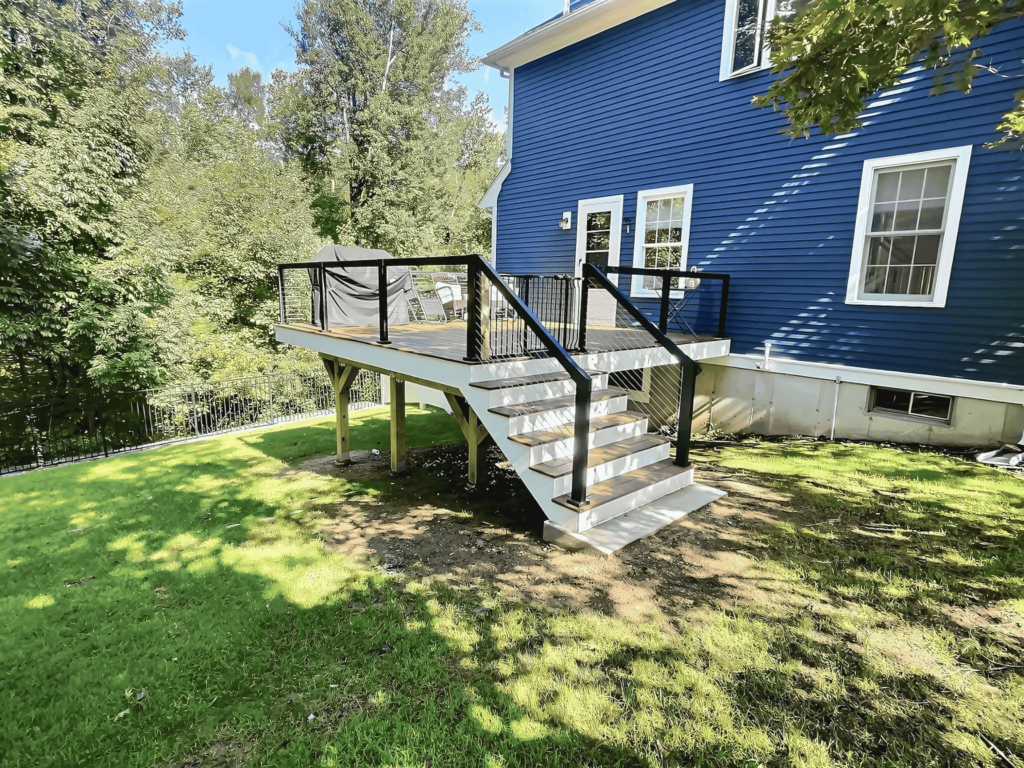
That’s where many of the real decisions begin.
Peabody has a wide mix of housing types, but a large percentage of homes were built in the middle of the last century. Capes, ranches, split-levels, and modest Colonials make up much of the housing stock, often on lots that were graded quickly as neighborhoods expanded. Drainage wasn’t always carefully engineered, and over time, soil settles unevenly. When you start planning a deck here, you’re rarely working with a perfectly level, perfectly drained site.
That reality shapes everything that follows.
Frost, Settlement, and Why Footings Deserve More Attention Than They Get
One of the most common deck issues we see in Peabody has nothing to do with the surface boards. It’s movement.
Freeze-thaw cycles here are consistent and unforgiving. Soil expands in the winter, relaxes in the spring, and repeats that process year after year. Older decks—especially those built decades ago—often used shallow footings or methods that were acceptable at the time but don’t hold up well under repeated seasonal movement.
Even newer decks can run into trouble if footing placement doesn’t account for drainage patterns or variable soil conditions across the yard. A deck can look solid when it’s finished, only to start showing subtle signs of movement after a few winters: railings pulling out of square, stairs no longer landing cleanly, fasteners working loose.
Addressing those risks properly isn’t glamorous work, but it’s foundational. In Peabody, getting the structure right below grade is what allows the deck above to stay stable and comfortable long term.
Attaching to Older Homes Is Rarely Plug-and-Play
Ledger connections are another area where Peabody decks demand extra care.
Many homes here have seen multiple exterior changes over the years—new siding layered over old, trim details altered, insulation added or removed. When it comes time to attach a deck, the wall assembly behind the siding isn’t always straightforward.
We often have to slow the process down to confirm what’s actually there:
How the rim joist was framed
Whether there’s solid backing where it needs to be
How water has historically moved down the wall
Skipping those steps can lead to long-term moisture problems that don’t show up until years later. Water intrusion at a ledger connection is one of the quiet ways exterior damage spreads, especially in climates like ours where moisture doesn’t dry out quickly in colder months.
Making the right call here sometimes means rebuilding portions of the connection area instead of simply fastening through it and moving on.
Snow Load, Shoveling, and Real-World Wear
Decks in Peabody don’t get a gentle off-season.
Snow accumulation, repeated shoveling, and long periods of freeze create wear patterns that homeowners don’t always anticipate. Surface materials that perform well in milder climates can struggle here if they’re not chosen and installed with winter conditions in mind.
We pay close attention to:
How water drains off the deck surface
Where snow tends to pile up naturally
Whether stair layouts encourage ice buildup
Those factors influence spacing, framing decisions, and how transitions are detailed. A deck that sheds water efficiently and allows snow to melt and refreeze without trapping moisture will simply last longer here.
Railings, Stairs, and the Details People Notice Later
Homeowners usually focus on how a deck looks from inside the house. That makes sense—it’s the view you live with. But some of the most important deck decisions show up later, once the space is being used daily.
In Peabody, stairs take a beating. Repeated freeze-thaw cycles combined with foot traffic and snow removal can expose weak points quickly. Railing systems also need to account for movement over time, not just how rigid they feel on day one.
Small decisions—like how stair stringers are supported, or how railing posts are isolated from standing water—have an outsized impact on how the deck feels five or ten years down the line.
Those details are easy to underestimate if you haven’t seen how decks age here.
Material Choices Are About Climate, Not Trends
Most deck conversations eventually turn to materials. In Peabody, the question isn’t which option looks best in a brochure. It’s which one fits the conditions and the homeowner’s expectations for maintenance and longevity.
Exposure matters. Some yards stay damp longer due to shade or grading. Others dry out quickly but take more wind and drifting snow. Matching materials to those conditions—rather than defaulting to what’s popular—helps avoid premature wear and frustration.
We spend a lot of time talking through those tradeoffs so homeowners understand what they’re committing to, not just at installation, but over the life of the deck.
Permits, Inspections, and Why Planning Matters
Deck projects here don’t happen in a vacuum. Permitting and inspections are part of the process, and timelines can be affected by factors outside the homeowner’s control. Building with inspection requirements in mind from the start helps prevent delays and last-minute changes that disrupt the project.
It also encourages better construction habits. When you know your work will be reviewed, you build differently—more deliberately, with fewer shortcuts.
That mindset carries through all of our deck work in Peabody, where long-term performance matters more than speed.
Why Experience in This Town Changes the Outcome
Peabody isn’t a place where decks can be treated as generic add-ons. The combination of older homes, variable soil conditions, and a demanding climate means every project needs to be read carefully before decisions are made.
Experience shows up in the questions asked early, the problems anticipated before framing begins, and the restraint to slow down when something doesn’t look right. Those judgment calls don’t always stand out when the project is finished, but they’re what allow the deck to feel solid and reliable year after year.
It’s the same approach we bring to all of our deck projects in Peabody—one that prioritizes durability, thoughtful construction, and respect for the conditions we’re building in.
A well-built deck here isn’t just about adding outdoor space. It’s about creating something that can handle Peabody’s winters, its ground conditions, and the realities of how homes in this town were built. When those factors are addressed properly, the result is a space that feels settled in—not just newly installed.